AFDA Charitable Trust

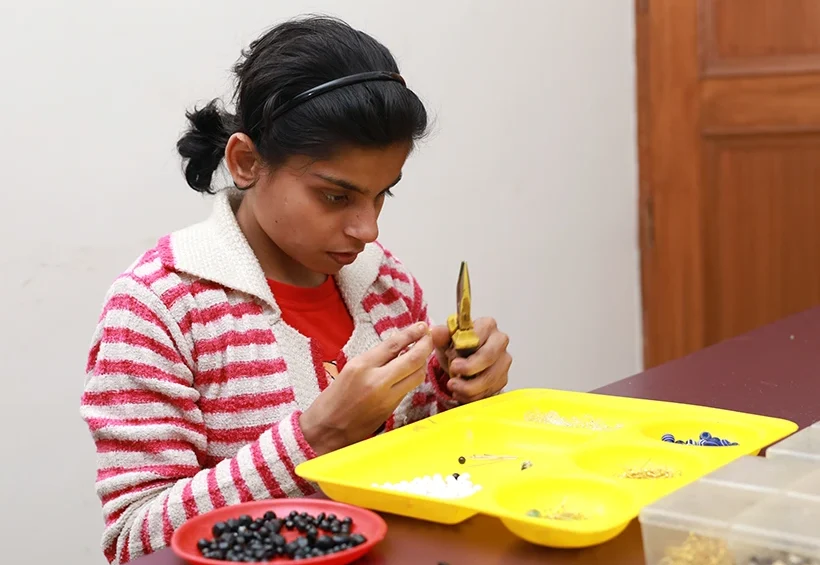
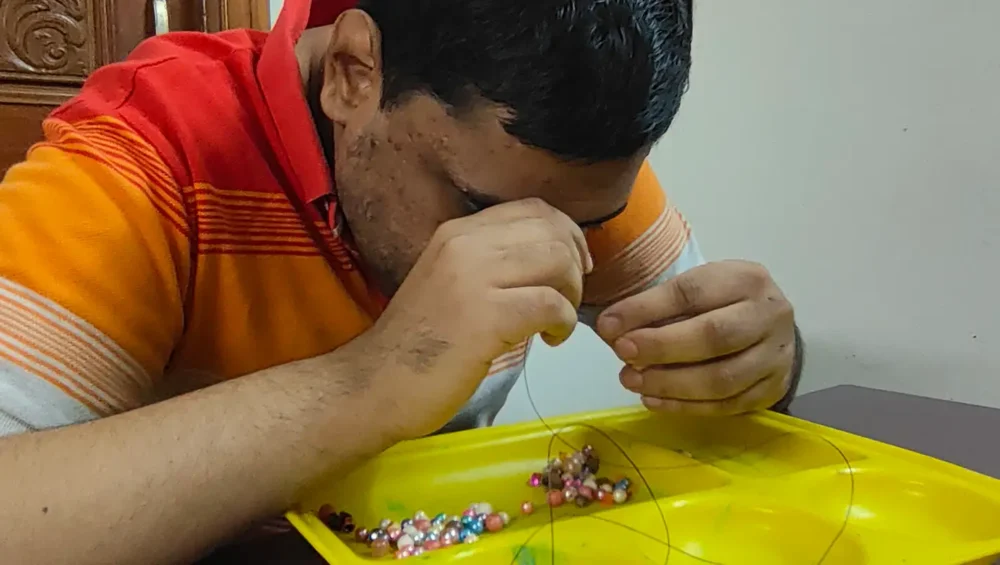
Esha beading CategoriesAwareness

Valued Roles, Valued Lives: Systems Thinking in Disability Inclusion, the AFDA model

For decades, disability support systems across the world have largely focused on helping individuals “fit into” society. The burden of adaptation has often fallen on the disabled person — learn better behaviours, improve communication, tolerate overwhelming environments, or become “work ready” for systems that were never designed with diversity in mind. But a growing movement […]

CategoriesAwareness

From Controlled Classrooms to Connected Lives:Rethinking Special Education & Inclusion

For decades, special education has been built on a foundation of care, structure, therapy, and specialized support. These systems were designed to help—and in many ways, they have. Yet despite good intentions, many models of support have also unintentionally created separation: separation from typical environments, separation from real-life experiences, and separation from the valued social […]

CategoriesAwareness

Why Neurotypical Children Are Given Roles—But Neurodivergent Children Must Fight for Them

Reframing Inclusion Through Social Role Valorization (SRV) Introduction: The Invisible Force That Shapes Opportunity In every classroom, playground, and workplace, one invisible force quietly determines who belongs, who participates, and who progresses: social roles. A neurotypical child is almost automatically understood as a student, a friend, a teammate, and a future professional. These roles are […]

CategoriesAwareness CSR and Companies

When Disability Meets Poverty and Gender: The Invisible Crisis We Must Address

The Reality Behind Closed Doors In India’s cities—behind construction sites, informal settlements, and crowded rental rooms—there is a reality we rarely acknowledge. A daily wage worker leaves home at 6 a.m.Inside, a child with a disability stays behind. Not because the family does not care.But because they have no choice. This is where disability meets […]

CategoriesAwareness CSR and Companies

From Sympathy to Citizenship: Rethinking Disability Employment in India

Disability is not a marginal issue—it is a fundamental part of the human experience. Globally, over 1.3 billion people live with some form of disability. In India, official estimates suggest 26.8 million persons with disabilities, though the real number is likely much higher due to underreporting. Within this population are millions of neurodivergent individuals, including […]

CategoriesAwareness CSR and Companies

10 Common Mistakes Corporates Make When Funding Disability CSR Projects

As corporate social responsibility (CSR) investments in disability inclusion continue to grow in India, many companies are making sincere efforts to support persons with disabilities. However, disability is a highly specialised field that intersects with education, health, rehabilitation, employment, and social inclusion. As a result, well-intentioned CSR initiatives sometimes fall into predictable pitfalls when programmes […]

CategoriesAwareness CSR and Companies

Why ‘Cost Per Beneficiary’ Is a Dangerous Metric in Disability CSR

In CSR committee meetings across India, one number often dominates the discussion: cost per beneficiary. It appears neutral, rational, and financially prudent. Lower cost per head is frequently equated with efficiency, scalability, and good governance. But in disability-focused CSR — particularly in neurodiversity and developmental disabilities — cost per beneficiary is not merely misleading; it […]

CategoriesAwareness CSR and Companies

Inclusion That Delivers Real Impact: Why CSR Must Invest in Valued Social Roles — Not Just Numbers

Every year, Corporate Social Responsibility (CSR) investments in India channel significant resources into education, therapy, skill development, and employment initiatives for persons with disabilities. These efforts are well-intentioned and often substantial in scale. Yet a critical question continues to sit at the margins of CSR decision-making: Are these investments enabling people to live meaningful, valued […]

CategoriesAwareness Research Studies

From Roles to Capabilities: Why a Good Life Is a Right, Not a Privilege

Rethinking Disability, Dignity, and Human Flourishing through SRV and Amartya Sen’s Capability Approach What does it mean to live a good life? For decades, development, education, and disability systems have tried to answer this question through metrics of productivity, independence, economic output, or charity-based support. However, a growing body of scholarship has shown that such […]