For decades, special education has been built on a foundation of care, structure, therapy, and specialized support. These systems were designed to help—and in many ways, they have. Yet despite good intentions, many models of support have also unintentionally created separation: separation from typical environments, separation from real-life experiences, and separation from the valued social roles that shape participation in society.
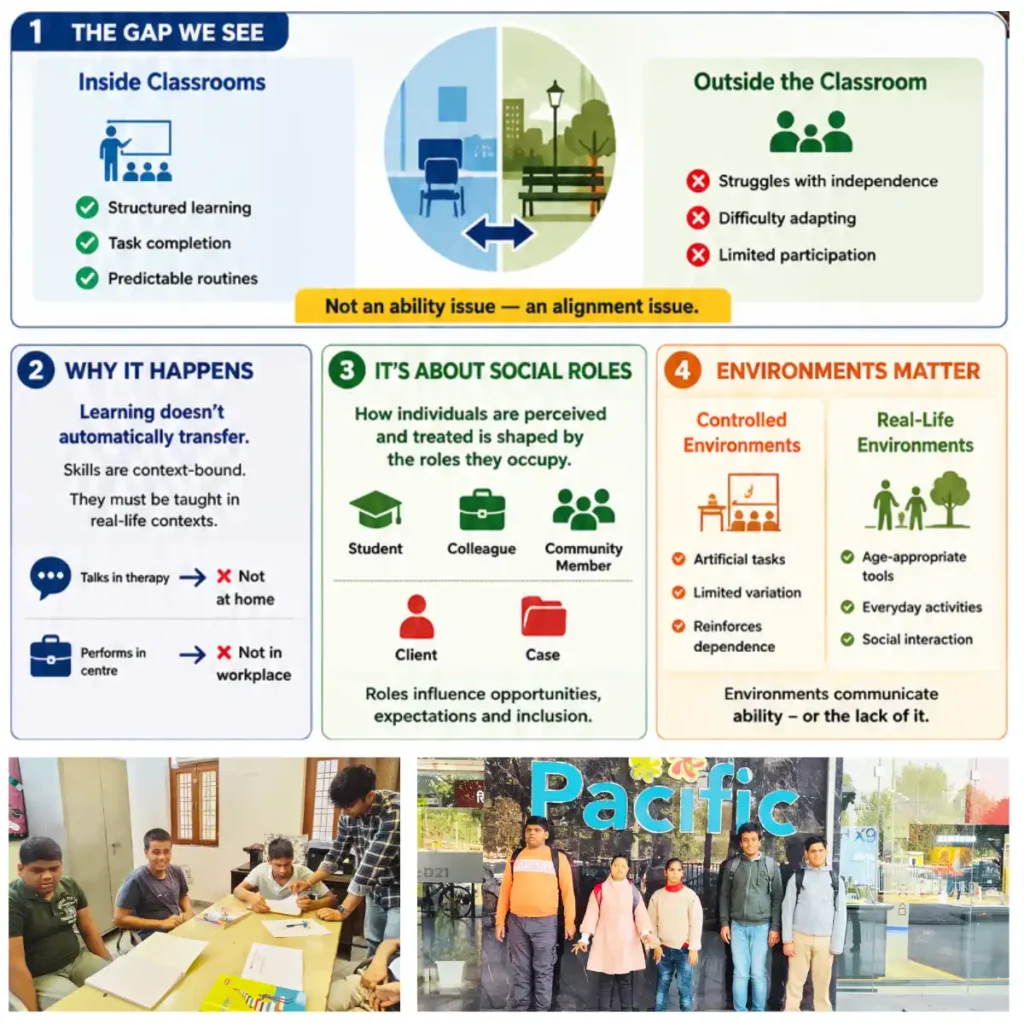
Today, the question is no longer simply whether support exists. The more important question is whether that support is preparing individuals with autism and developmental disabilities for meaningful, connected, and participatory lives.
At the Ashish Foundation, this question guides our approach to education, therapy, vocational training, and community inclusion. We believe that true inclusion is not achieved through services alone. It is achieved when individuals are given opportunities to be seen as capable contributors, active participants, and valued members of society.
This conversation has become increasingly urgent as autism prevalence continues to rise globally and within India. Current estimates suggest that approximately 61.8 million individuals worldwide were on the autism spectrum in 2021, representing nearly 1 in 126 people globally. In India, prevalence estimates now range between 1% and 2.8%, with some studies suggesting rates approaching 1 in 36 children—similar to current figures in the United States. As of 2024, nearly 18 million Indians are estimated to be living with Autism Spectrum Disorder (ASD), making it one of the country’s most significant developmental challenges.
Despite increasing awareness, access to meaningful support remains deeply unequal. India continues to face severe shortages of trained professionals, inclusive educational infrastructure, affordable therapies, and employment opportunities for individuals with autism and developmental disabilities. In many communities, particularly among economically disadvantaged populations, stigma and lack of awareness continue to prevent early intervention and meaningful inclusion. Families are often left to navigate overwhelming financial burdens, social isolation, and limited support systems.
In areas such as West Delhi, where Ashish Foundation primarily works, these challenges are especially visible. Many children with developmental disabilities remain excluded from mainstream educational systems. Some are kept at home due to fear of judgment or social embarrassment. Others enter programs that focus heavily on compliance and behavior management but provide limited opportunities for real-world participation, autonomy, or identity formation.
This is not simply an education gap. It is a dignity gap.
One of the most significant yet overlooked issues in special education is the way support itself can unintentionally restrict growth. In many environments, support becomes synonymous with doing things for individuals rather than enabling them to do things independently. Tasks are completed quickly for efficiency. Decisions are made on behalf of the individual. Mistakes are avoided rather than used as opportunities for learning. While these actions are often rooted in care and protection, over time they can reduce opportunities for autonomy, confidence, problem-solving, and self-determination.
At the Ashish Foundation, we believe meaningful support should not create dependence; it should create participation. This requires a deliberate shift in mindset—from control to empowerment, from protection to preparation, and from service delivery to role development.
Research in autism and learning consistently shows that skills learned in highly controlled settings often fail to transfer into real-life environments unless learning is intentionally designed for generalization (Stokes & Baer, 1977; Schreibman et al., 2015). This explains a familiar pattern observed across many intervention systems: a child who communicates effectively during therapy sessions may struggle to communicate at home or within the community, while a young adult who performs well in a training centre may find it difficult to adapt to an actual workplace.
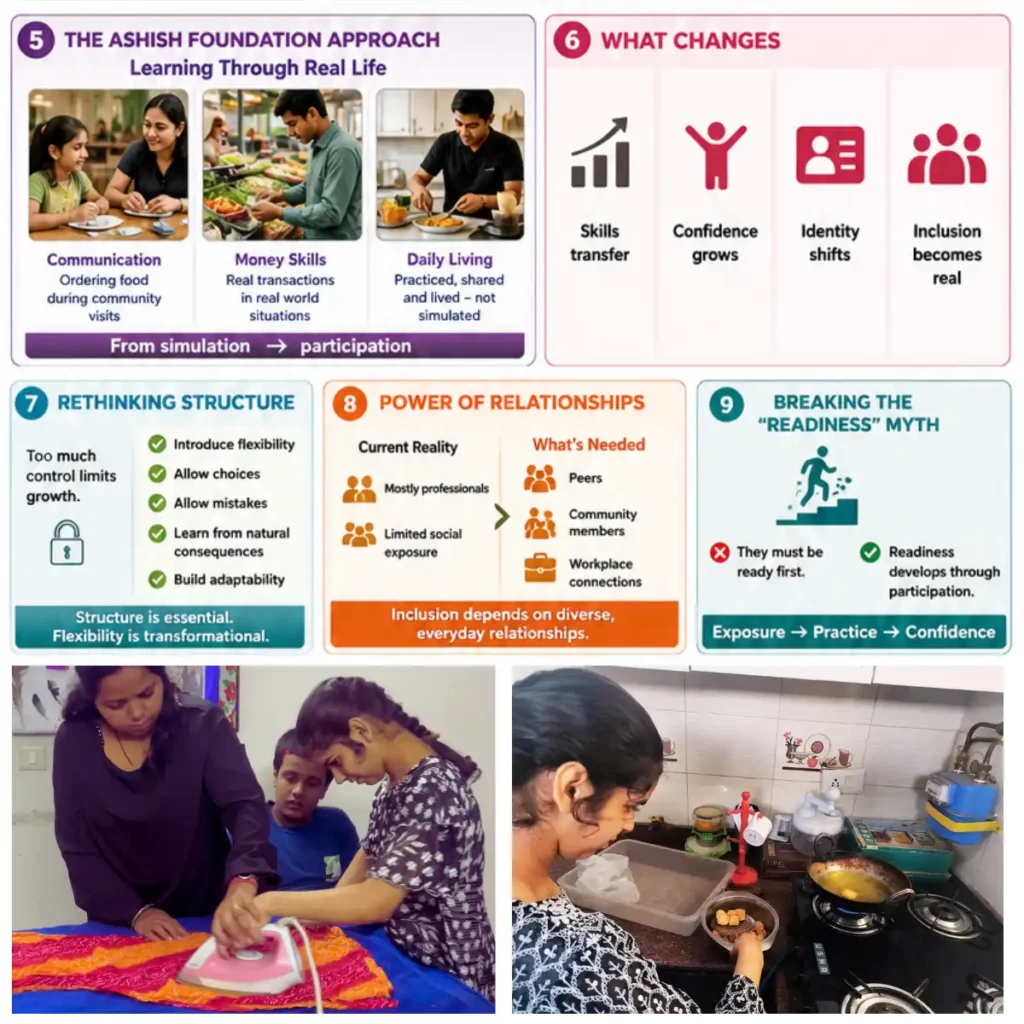
The issue is not whether learning occurred. The issue is where and how learning occurred.
Many traditional special education models rely heavily on structured routines, repetitive drills, artificial task setups, and segregated environments. While these systems may demonstrate measurable internal progress, life outside these environments is dynamic, unpredictable, relational, and socially complex. Real life requires adaptability, decision-making, and participation—not merely task completion.
At Ashish Foundation, we have intentionally worked to rethink this model.
Our approach is strongly influenced by the principles of Social Role Valorization (SRV), developed by Dr. Wolf Wolfensberger. Unlike approaches that focus primarily on reducing behaviors perceived as “non-typical,” SRV emphasizes helping individuals with disabilities occupy valued social roles within society. This distinction is critical because social roles shape how individuals are perceived, treated, and included within communities.
When individuals are consistently viewed through limiting roles such as “patient,” “case,” or “burden,” opportunities for participation and contribution diminish. However, when individuals are supported to occupy valued roles such as student, employee, artist, colleague, volunteer, or community member, expectations shift. Acceptance increases. Opportunities expand. Dignity becomes possible.
This philosophy significantly shapes the work we do at Ashish Foundation.
Rather than focusing solely on compliance or behavior normalization, we emphasize strength-based learning, experiential education, vocational readiness, social participation, and community integration. We actively identify and nurture individual talents and interests—including music, art, academics, hospitality skills, office administration, digital work, and functional life skills.
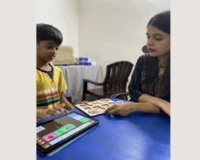
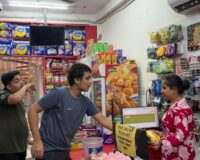
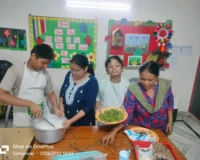
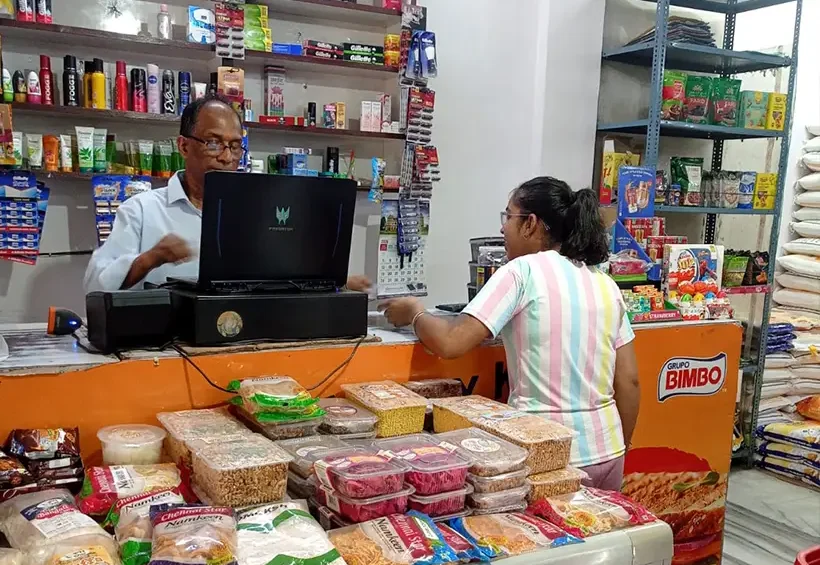
Learning is intentionally embedded within real-life contexts. Communication is practiced during actual community interactions. Money management is taught through real transactions. Daily living skills are integrated into shared routines and responsibilities. Vocational training connects directly with employment exposure and workplace participation.
This movement from simulation to participation changes outcomes in powerful ways.
When learning becomes connected to real environments, skills begin to transfer more naturally. Confidence becomes visible. Individuals begin to see themselves—and are increasingly seen by others—as capable contributors rather than passive recipients of care.
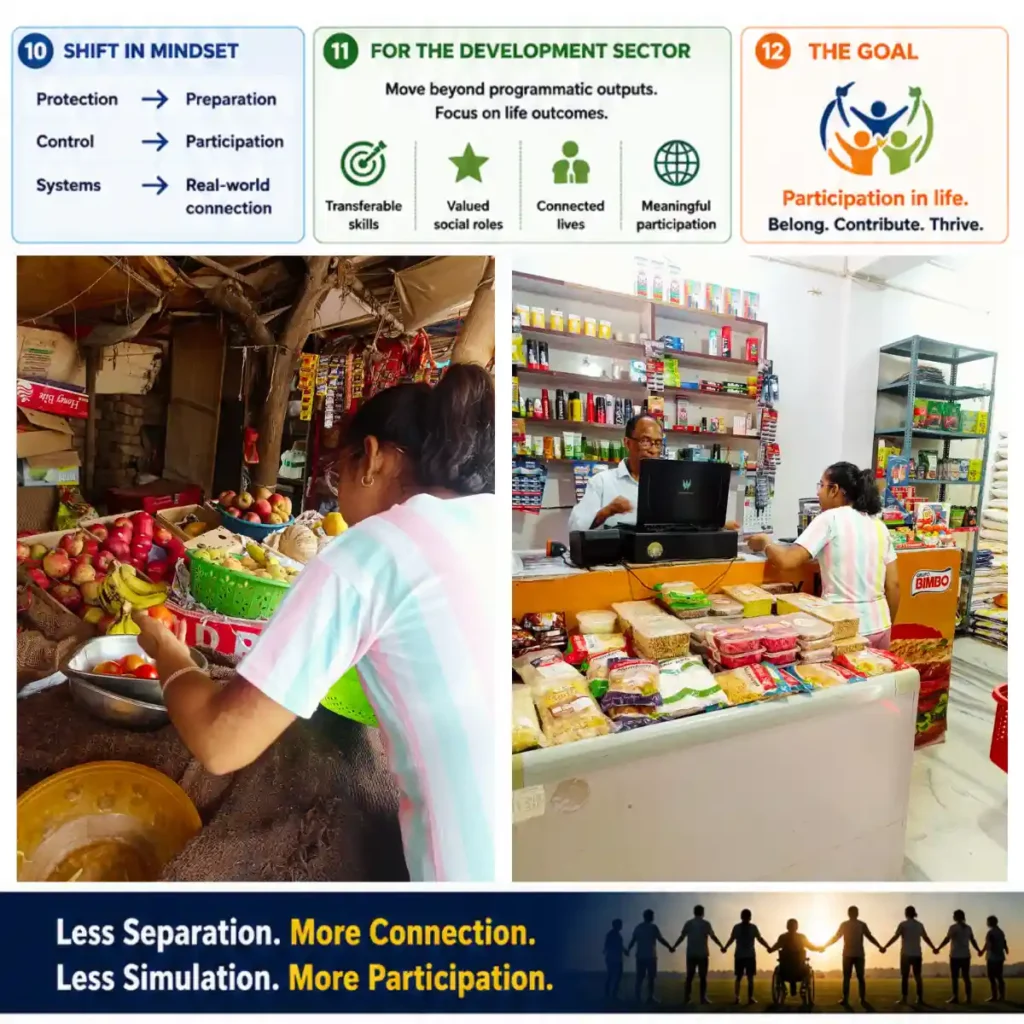
Equally important is the role of relationships and community exposure. Many individuals with developmental disabilities spend the majority of their lives interacting only with professionals, caregivers, or other individuals with disabilities. While these relationships are valuable, they are insufficient for building socially connected lives.
Research on social inclusion consistently demonstrates that meaningful participation depends heavily on access to diverse community relationships and naturally occurring social networks (Bigby & Wiesel, 2015). Without these opportunities, even well-supported individuals may remain socially isolated.
This is why Ashish Foundation places strong emphasis on family engagement, community awareness, employer sensitization, and inclusive participation. Inclusion cannot happen only inside classrooms or therapy centres. Society itself must become more inclusive.
This need is particularly urgent in India, where socioeconomic barriers significantly impact access to intervention and opportunity. Many low-income families spend a substantial portion of their income on therapies and specialized services, often forcing difficult financial decisions. At the same time, adults with autism continue to face severe employment barriers due to lack of workplace accommodations, limited employer awareness, and persistent social stigma.
Ashish Foundation attempts to address these gaps through affordable community-based services, scholarships, transportation support, integrated therapies, customized vocational training, and employment-focused interventions. Our low teacher-student ratio and individualized development plans allow learning to be tailored around each student’s strengths, abilities, and future goals.
Importantly, we also believe that individuals do not become “ready” for participation in isolation.
Too often, systems delay exposure to real-world environments until individuals are considered sufficiently prepared. But readiness itself develops through participation. People become capable by engaging with the world, making choices, encountering challenges, building relationships, and gradually experiencing responsibility within supportive environments.
This requires us to rethink long-standing assumptions within special education and disability services.
The goal cannot simply be independence within classrooms or therapy systems.
The goal must be participation in life.
As India continues to confront rising autism prevalence and growing demands for inclusive support systems, there is an urgent need to move beyond models rooted primarily in control, segregation, and compliance. We must begin designing systems that prioritize dignity, adaptability, contribution, and belonging.
This does not mean removing support.
It means repositioning support so that it enables individuals to move toward valued social roles, meaningful participation, and connected lives.
Because ultimately, the true measure of any educational or therapeutic system is not how efficiently it functions internally—but how effectively it prepares individuals to live, belong, and contribute in the world outside it.
The future of inclusion will not come from doing more of the same.
It will come from doing things differently.
Less separation. More participation.
Less simulation. More connection.
Less control. More dignity.
And perhaps most importantly, a deeper recognition that individuals with autism and developmental disabilities are not problems to be managed, but human beings with strengths, identities, aspirations, and the potential to contribute meaningfully to society when given the opportunity to do so.
References
Bigby, C., & Wiesel, I. (2015). Mediating community participation: Practice of support workers in initiating, facilitating or disrupting encounters. Journal of Applied Research in Intellectual Disabilities, 28(4), 307–318.
Schmidt, R. A., & Bjork, R. A. (1992). New conceptualizations of practice: Common principles in three paradigms suggest new concepts for training. Psychological Science, 3(4), 207–217.
Schreibman, L., Dawson, G., Stahmer, A. C., et al. (2015). Naturalistic developmental behavioral interventions: Empirically validated treatments for autism spectrum disorder. Journal of Autism and Developmental Disorders, 45(8), 2411–2428.
Stokes, T. F., & Baer, D. M. (1977). An implicit technology of generalization. Journal of Applied Behavior Analysis, 10(2), 349–367.
Wolfensberger, W. (2000). A brief overview of social role valorization. Mental Retardation, 38(2), 105–123.
UNICEF India. Children with Disabilities in India: From Commitments to Outcomes.
National Centre for Promotion of Employment for Disabled People (NCPEDP), India Disability Statistics and Employment Reports.
NCERT (2022). Inclusive Education and Infrastructure Access in Indian Schools.
Delhi Skill Development Mission Report (2023). Employment and Inclusion Challenges for Persons with Disabilities.
World Health Organization (WHO). Autism Spectrum Disorders Fact Sheets and Global Prevalence Data.
CDC Autism and Developmental Disabilities Monitoring (ADDM) Network Reports.