Reframing Inclusion Through Social Role Valorization (SRV)
Introduction: The Invisible Force That Shapes Opportunity
In every classroom, playground, and workplace, one invisible force quietly determines who belongs, who participates, and who progresses: social roles.
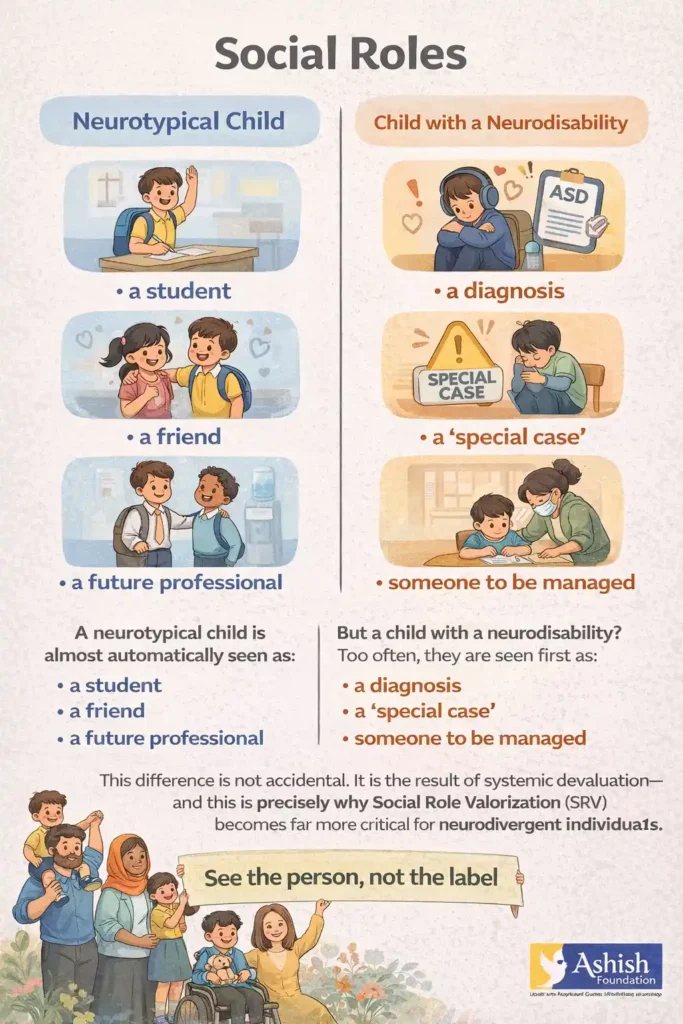
A neurotypical child is almost automatically understood as a student, a friend, a teammate, and a future professional. These roles are not assigned through formal systems—they are assumed, reinforced, and protected through everyday interactions.
But for a child with a neurodisability, the starting point is often very different. They are more likely to be seen first as a diagnosis, a “special case,” or someone who needs to be managed rather than someone who contributes.
This is not incidental. It reflects a deeper pattern of systemic devaluation. And this is precisely why Social Role Valorization (SRV) is not optional—it is essential.
1. The Starting Point Is Not Equal
The disparity begins early and is reinforced structurally.
Data from India highlights the scale of exclusion:
- Only 62.9% of persons with disabilities (ages 3–35) have ever been enrolled in school
- Only 23.1% continue attending after enrolment
- Nearly 75% of children with disabilities are not in regular schools
- Children with disabilities are five times more likely to be out of school
- Only about 9% complete secondary education
Even within schools:
- There is a severe shortage of trained special educators
- Inclusive teaching practices remain inconsistent
- Infrastructure and accessibility gaps persist
This is not merely exclusion from education—it is exclusion from roles.
A neurotypical child is assumed to belong.
A neurodivergent child must prove they do.
2. SRV: A Response to Devaluation, Not Preference
Social Role Valorization (SRV), developed by Wolf Wolfensberger, is grounded in a simple but powerful idea:
People who hold valued social roles are more likely to access “the good things of life.”
SRV is particularly relevant for individuals who are vulnerable to being cast into devalued roles.
Historically, persons with disabilities have been assigned roles such as:
- Dependent
- Patient
- “Special child”
- Lifelong recipient of care
These roles do more than describe—they limit expectations, opportunities, and identity.
Neurotypical children are largely protected from such role assignments.
Neurodivergent children are not—unless systems actively intervene.
3. The Real Difference: Access to Roles
The distinction is not about need—it is about access.
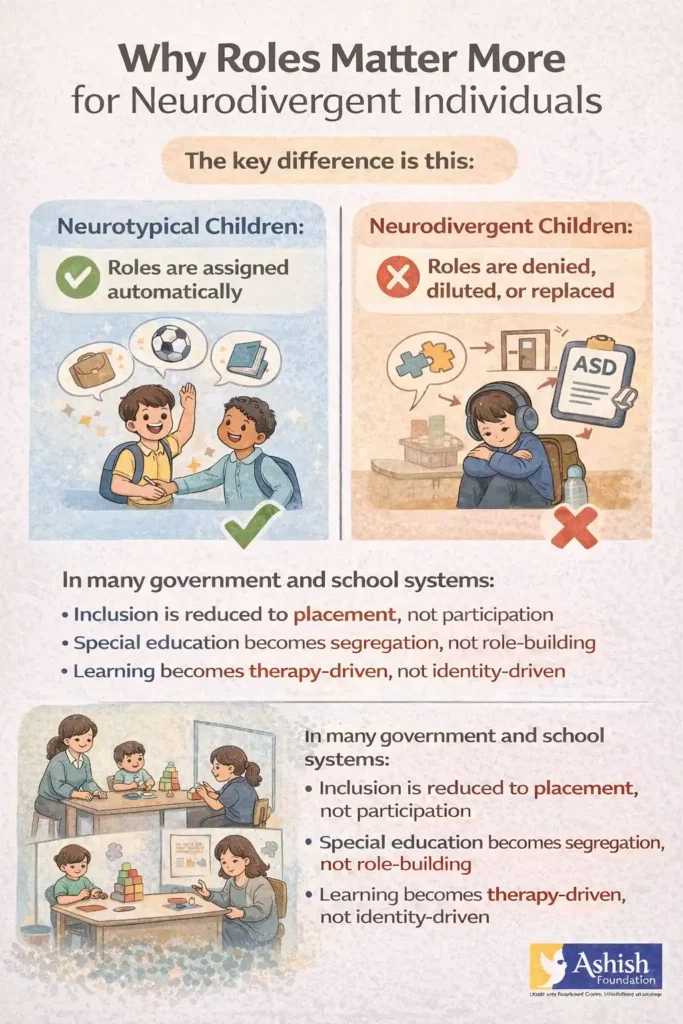
- Neurotypical children are given roles by default
- Neurodivergent children often have roles denied, diluted, or replaced
Within many education systems:
- Inclusion becomes placement, not participation
- Special education becomes segregation, not role-building
- Learning becomes therapy-driven, not identity-driven
As a result:
- A child may attend school—but not be recognized as a student
- Participate in activities—but not be seen as a peer
- Learn skills—but not be perceived as competent
Without intentional role-building, inclusion remains superficial.
4. Image & Competency: Why They Matter More Here
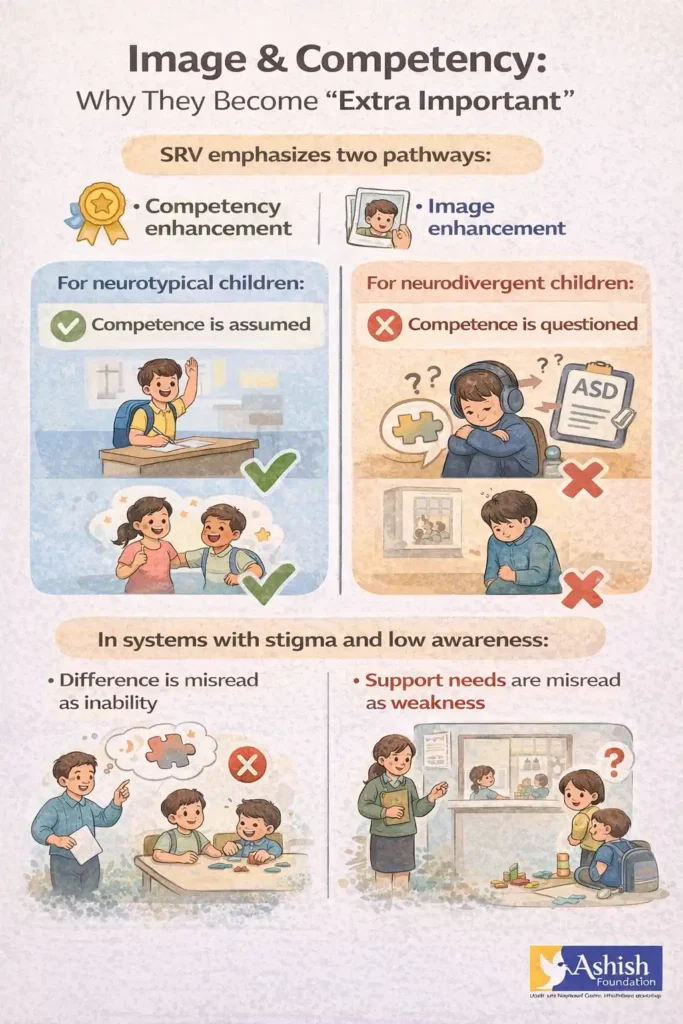
SRV emphasizes two critical pathways:
- Competency enhancement (building skills and independence)
- Image enhancement (shaping how the person is perceived)
For neurotypical children:
- Competence is assumed
- Social image is protected
For neurodivergent children:
- Competence is often questioned
- Image is frequently shaped by misunderstanding
Differences in communication, behavior, or sensory processing are often misinterpreted as inability. Support needs are mistaken for weakness.
This creates a critical insight:
Teaching skills is not enough.
Those skills must be visible, valued, and connected to meaningful roles.
5. The Conservatism Corollary: Why Equal Is Not Enough
A key principle within SRV—the conservatism corollary—states:
The more a person is socially devalued, the more intentional and high-quality the support they require.
This is not about giving unfair advantage.
It is about responding to unequal starting points.
In practice, this means neurodivergent children need:
- Stronger and more intentional opportunities
- Higher expectations—not lower ones
- Real-life role exposure
- Greater visibility in community and social settings
Equality does not mean sameness.
It means equity in response to disadvantage.
6. Where Systems Fall Short: Presence Without Participation
India’s education ecosystem operates across:
- Government/public schools
- Inclusive classrooms
- Special schools
However, research consistently highlights:
- Fragmentation between systems
- Limited coordination
- Overemphasis on infrastructure over quality
- Segregation within special education
The result?
Children are often in the system—but not meaningfully part of it.
This is exactly what SRV cautions against:
presence without valued participation.
7. When Roles Change, Outcomes Change
When children are supported into valued roles, transformation follows.
Instead of:
- “Child with autism in therapy”
They become:
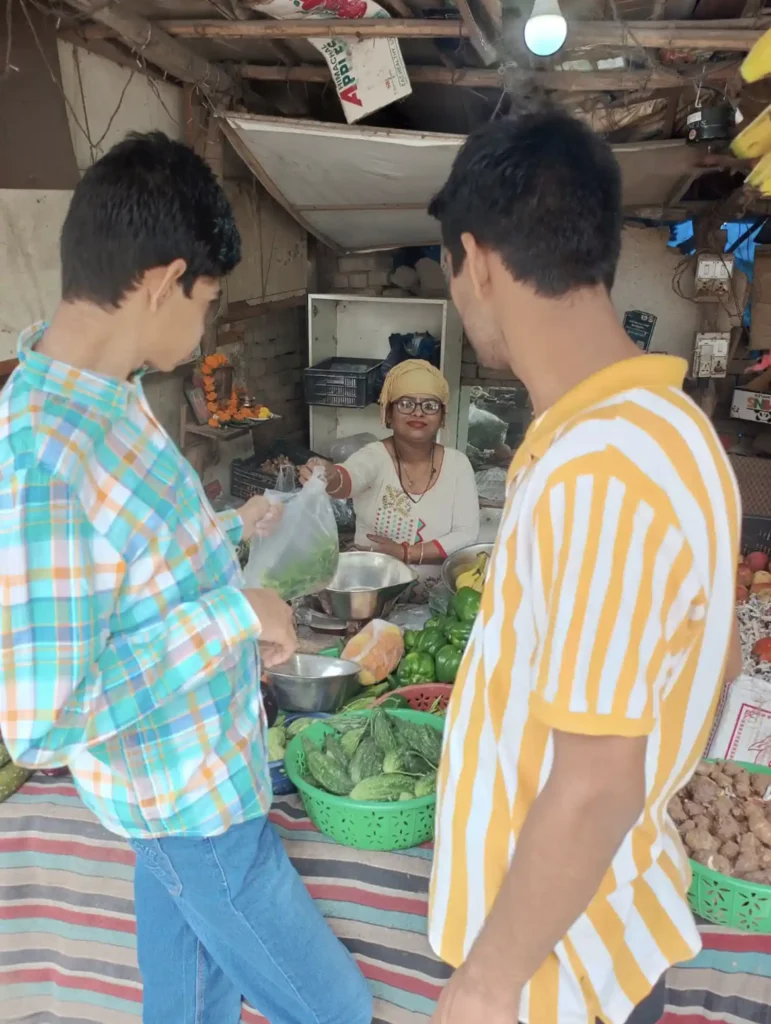
- A student participating in class
- An artist exhibiting work
- An intern contributing to a workplace
At practice level—including organizations like Ashish Foundation—role-based approaches have shown:
- Increased independence
- Improved social participation
- Stronger identity and self-worth
Because:
- Roles shape perception
- Perception shapes opportunity
- Opportunity shapes life trajectories
8. The Real Gap Is Not Ability—It Is Expectation
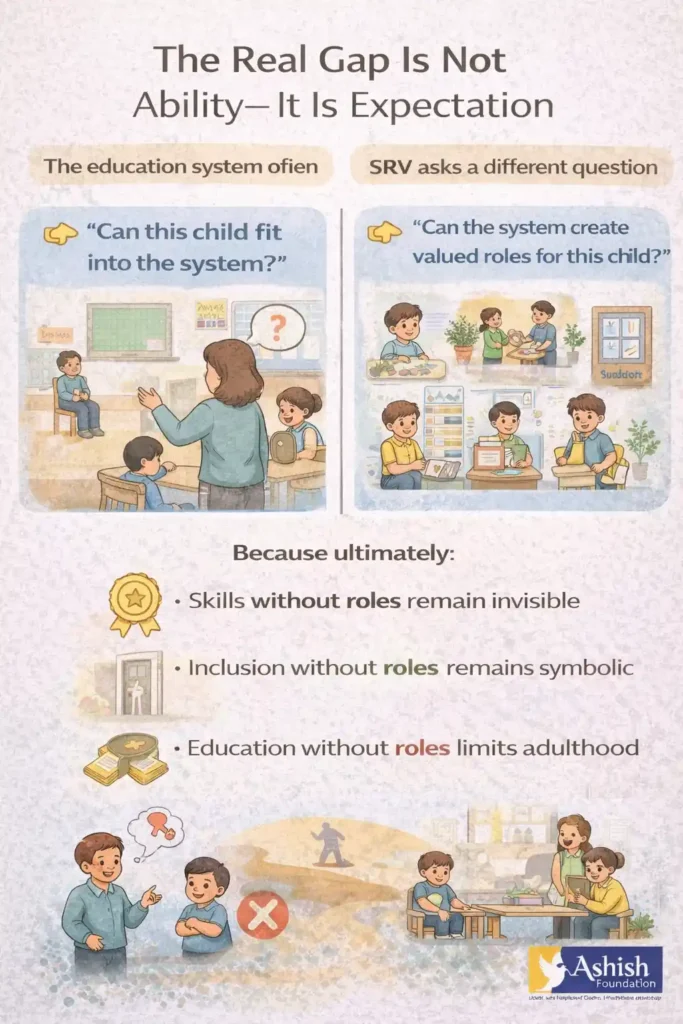
Traditional systems often ask:
“Can this child fit into the system?”
SRV asks a more important question:
“Can the system create valued roles for this child?”
Because ultimately:
- Skills without roles remain invisible
- Inclusion without roles remains symbolic
- Education without roles limits adulthood
Closing Thought
Neurotypical children grow into roles because society expects them to.
Neurodivergent children are often kept outside those roles—unless deliberate, thoughtful intervention changes that trajectory.
Social Role Valorization is not about giving extra importance to some individuals.
It is about correcting a system where roles were never equally distributed to begin with.
References:
- Lemay, R. (2009). Devaluation and people with developmental disabilities: A brief history. Intellectual and Developmental Disabilities, 47(6), 410–414.
- National Sample Survey Office (NSSO). (2019). Persons with disabilities in India (76th Round). Ministry of Statistics and Programme Implementation, Government of India.
- Observer Research Foundation (ORF). (2021). Inclusive education in India: Implementation challenges and prospects.
- UNESCO. (2019). State of education for children with disabilities in India. United Nations Educational, Scientific and Cultural Organization.
- UNICEF India. (2020). Including children with disabilities in quality learning: What needs to be done?
- Wolfensberger, W. (1983). Social role valorization: A proposed new term for the principle of normalization. Mental Retardation, 21(6), 234–239.
- Wolfensberger, W. (1998). A brief introduction to Social Role Valorization: A high-order concept for addressing the plight of societally devalued people. Syracuse University Training Institute.
- World Bank. (2007). People with disabilities in India: From commitments to outcomes.
- Ministry of Human Resource Development. (2020). National Education Policy 2020. Government of India.
- Government of India. (2016). Rights of Persons with Disabilities Act.