The Reality Behind Closed Doors
In India’s cities—behind construction sites, informal settlements, and crowded rental rooms—there is a reality we rarely acknowledge.
A daily wage worker leaves home at 6 a.m.
Inside, a child with a disability stays behind.
Not because the family does not care.
But because they have no choice.
This is where disability meets poverty—and creates a form of exclusion that is not just structural, but deeply human. When gender is added, this exclusion becomes layered, unequal, and often invisible.
To truly understand this, we must look at how poverty, gender, and social value systems interact to shape life outcomes.
The Overlooked Intersection: Disability, Poverty, and Gender
India is home to over 26 million persons with disabilities, many living in low-income households dependent on unstable, informal work.
When disability and poverty intersect, the consequences are severe:
- Children with disabilities are less likely to attend school
- Those who do often face exclusion, neglect, or bullying
- Families are forced to choose between earning a livelihood and providing care
Estimates suggest that more than one in four children with disabilities (aged 5–19) have never attended school. Even among those enrolled, progression beyond primary education remains limited.
For girls, the situation is often worse—shaped by safety concerns, restrictive norms, and lower perceived economic returns.
This is not just an education gap.
It is the beginning of a lifetime of exclusion.
Understanding Exclusion Through Social Role Valorization (SRV)
The concept of Social Role Valorization (SRV) helps explain why this exclusion persists.
SRV highlights that individuals who occupy socially devalued roles are often denied access to opportunities, relationships, and resources.
In low-income communities:
- A child with autism may be labelled “difficult”
- A young adult with intellectual disability may be seen as “unemployable”
These labels shape expectations—and expectations shape outcomes.
Over time, this exclusion becomes internalized, affecting confidence, identity, and aspirations. The result is not just social exclusion, but psychological marginalization.
What Happens Inside Low-Income Households
1. When School Is Not an Option
For many families, education is not easily accessible.
Barriers include:
- High transport costs
- Lack of inclusive infrastructure
- Limited teacher training
- Overcrowded classrooms
Children with developmental disabilities are often ignored or reprimanded. Eventually, families are informally pushed to withdraw them.
Exclusion here is gradual—but decisive
2. Intra-Household Inequality: Who Gets the Opportunity?
In resource-constrained households, decisions are shaped by survival.
When only one child can be educated:
- A boy—even with a disability—may be prioritized
- A girl is more likely to be kept at home
Her labour is seen as immediately useful. Her education is not seen as an investment.
When disability intersects with gender, exclusion deepens—creating inequality within the same household.
3. When School Fails, Work Begins
Children excluded from school often enter informal labour early:
- Rag-picking
- Workshop assistance
- Domestic work
Boys tend to enter visible labour markets.
Girls are absorbed into invisible, unpaid roles at home.
These are not choices—they are outcomes of systemic failure.
4. When Support Needs Are High: Confinement
For individuals with higher support needs, the absence of services leads to more severe exclusion.
In many cases:
- Individuals are left alone for long hours
- Movement is restricted
- Medication is used as control
- Institutionalization becomes the last resort
These are not acts of neglect.
They are outcomes of a system that offers no alternatives.
Protection vs Participation: A Difficult Trade-off
The “Conservatism Corollary” within SRV suggests that vulnerable individuals need protection.
In low-income contexts, however, protection often becomes restriction.
For girls with disabilities:
- Mobility is limited due to safety concerns
- Participation in school and community life is restricted
What appears as overprotection is often a rational response to unsafe environments.
Yet, it creates a paradox:
Protection leads to exclusion.
Safety, Gender, and Bodily Autonomy
Girls and women with disabilities face a significantly higher risk of violence and abuse.
In dense urban settlements with limited safety infrastructure:
- Families restrict girls’ movement
- Education and social participation are curtailed
A girl may be kept at home—not because she cannot learn,
but because the world is not safe enough.
This leads to lifelong consequences:
limited education, reduced agency, and restricted independence.
The Hidden Care Economy
Caregiving is one of the most invisible yet critical dimensions of this issue.
In low-income households:
- Mothers often leave paid work to provide care
- Sisters are pulled out of school
This creates a cascading effect:
- One child excluded due to disability
- Another excluded due to caregiving responsibilities
Unpaid care work reinforces gender inequality and limits economic mobility for entire families.
A Life-Course of Exclusion
Exclusion is not a one-time event—it compounds over time.
A girl excluded from education today is more likely to:
- Remain economically dependent
- Have limited employment opportunities
- Face increased vulnerability in adulthood
Exclusion is cumulative, not temporary.
Why Systems Fail: The Problem of Fragmentation
Current systems often fail because they operate in silos:
- Poverty programs ignore disability
- Disability programs ignore economic realities
- Gender policies exclude disability
- Urban planning overlooks caregiving
This lack of alignment—known as model coherency failure—means that services do not reflect real-life needs.
For families, this results in systems that are inaccessible, irrelevant, or ineffective.
The Data Gap: What We Don’t Count
Much of this exclusion remains invisible:
- Girls engaged in unpaid care work are not counted
- Education data captures enrolment, not participation
- Disability remains underreported
What is not counted is not prioritized.
This invisibility reinforces neglect in policy and planning.
A Cycle That Reinforces Itself
Disability, poverty, and gender do not just coexist—they reinforce each other:
- Educational exclusion
- Limited employment opportunities
- Intergenerational poverty
Gender determines who is left furthest behind.
From Survival to Social Roles: The Ashish Foundation Approach
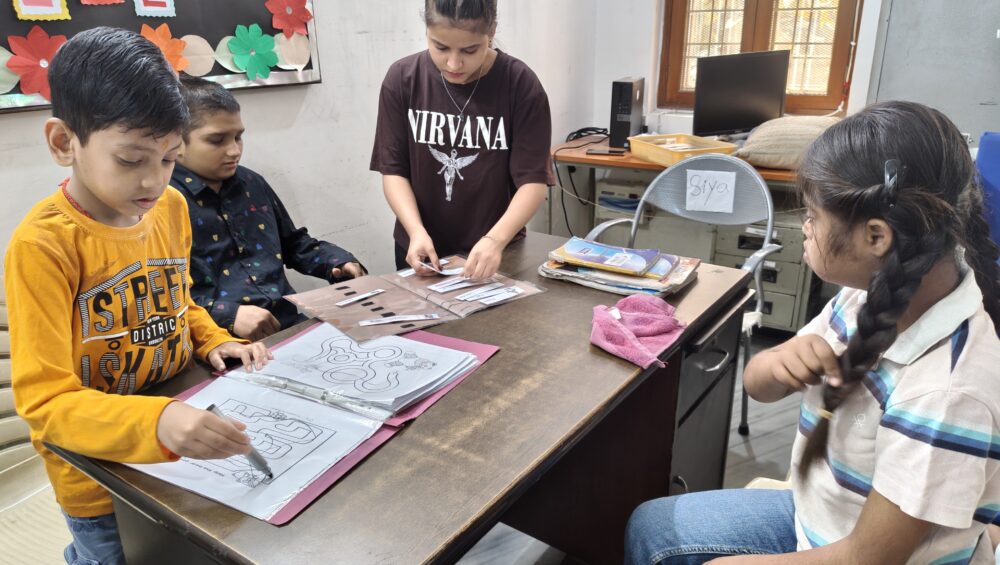
At Ashish Foundation, this reality is visible every day—but so is potential.
Grounded in SRV, the approach focuses on enabling individuals to occupy valued roles:
- Student
- Worker
- Contributor
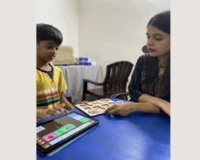
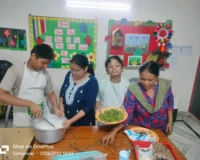
Through early intervention, individualized education, and skill-building, the goal is not just independence—but dignity and participation.
The shift is powerful:
Invisibility → Identity → Contribution
Protection → Participation → Power (for girls)
What Must Change
To break this cycle, change must be systemic and intersectional:
- Build community-based support systems (day-care, respite care)
- Ensure meaningful inclusion in schools—not just enrolment
- Integrate disability into poverty alleviation programs
- Prevent child labour through inclusive education
- Design targeted interventions for girls with disabilities
- Recognize and reduce unpaid care work
We often ask:
Why don’t families send children with disabilities to school?
But the real question is:
What happens when the system gives them no viable option?
A Call to Action
If we want truly inclusive cities, we must begin with those most excluded within them.
- Policymakers must design for intersectionality
- Employers must create meaningful opportunities
- Civil society must bridge the gap between systems and communities
At Ashish Foundation, the belief is simple:
No individual should be reduced to their limitations.
No family should navigate this reality alone.
Because inclusion is not just about access.
It is about dignity, visibility, and value.
References:
- Aubry, T., Flynn, R. J., Virley, B., & Neri, J. (2013). Social role valorization in community mental health housing. Journal of Community Psychology, 41(2), 218–235.
- Banks, L. M., & Polack, S. (2014). The economic costs of exclusion and gains of inclusion of people with disabilities. London School of Hygiene & Tropical Medicine.
- Kabeer, N. (2016). Gender equality, economic growth, and women’s agency. Feminist Economics, 22(1), 295–321.
- Mitra, S., Posarac, A., & Vick, B. (2013). Disability and poverty in developing countries. World Development, 41, 1–18.
- United Nations Children’s Fund (UNICEF). (2021). Seen, counted, included. UNICEF.
- United Nations Children’s Fund (UNICEF). (2023). Disability and education data. Retrieved from https://data.unicef.org
- United Nations Department of Economic and Social Affairs (UN DESA). (2018). The empowerment of women and girls with disabilities.
- United Nations Population Fund (UNFPA). (2018). Young persons with disabilities and gender-based violence.
- World Bank & World Health Organization. (2011). World report on disability.
- Wolfensberger, W. (1983). Social role valorization. Mental Retardation.
- Wolfensberger, W. (1998). A brief introduction to social role valorization.
- Economic and Political Weekly. (Various issues). Gender, unpaid care work, and labour participation in India.
- India Development Review. (Various articles). Disability inclusion and urban poverty in India.
- World Development Perspectives. (2022). Disability and gender intersectionality in education.