As corporate social responsibility (CSR) investments in disability inclusion continue to grow in India, many companies are making sincere efforts to support persons with disabilities. However, disability is a highly specialised field that intersects with education, health, rehabilitation, employment, and social inclusion. As a result, well-intentioned CSR initiatives sometimes fall into predictable pitfalls when programmes are designed without adequate understanding of the sector.
Recognising these challenges can help CSR leaders design more responsible partnerships, stronger programme models, and more sustainable outcomes for persons with disabilities.
1. Treating disability as a generic social cause
Disability is often grouped within broad CSR themes such as education, health, or livelihoods. However, disability inclusion—particularly in the context of developmental disabilities such as autism or intellectual disabilities—requires specialised approaches that integrate therapy, education, social development, and family support. Programmes that do not account for these complexities often struggle to produce meaningful outcomes (World Health Organization & World Bank, 2011).
2. Prioritising beneficiary numbers over depth of impact
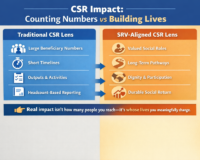
CSR reporting frameworks frequently emphasise the number of beneficiaries reached. While scale is important, disability interventions often require intensive, long-term engagement with individuals. High beneficiary numbers may sometimes reflect superficial interventions rather than meaningful developmental progress.
Research in disability services shows that sustained engagement and personalised support are critical to improving independence, communication, and social participation (WHO & World Bank, 2011).

3. Funding short-term projects for long-term developmental needs
Children with developmental disabilities often require years of structured support across multiple developmental stages. Short-term CSR projects—particularly those limited to one-year cycles—may provide temporary services but rarely lead to lasting developmental gains.
Long-term support systems that integrate education, therapy, and skill-building are essential for improving outcomes across the life course (Kuper & Heydt, 2019).
4. Assuming all NGOs working in disability have domain expertise
Many non-profit organisations work with persons with disabilities, but not all possess specialised knowledge or professional capacity. Supporting individuals with developmental disabilities often requires multidisciplinary teams that include special educators, therapists, psychologists, and vocational trainers.
CSR due diligence therefore needs to examine professional expertise, programmatic depth, and institutional experience rather than relying solely on NGO registration or general social service claims.
5. Focusing only on education without planning for adulthood
A common gap in disability-focused CSR programmes is the lack of planning for transition to adulthood. While many initiatives support children’s education, far fewer address pathways to employment, independent living, or community participation.
Without structured transition planning, many young adults with disabilities remain excluded from the labour market despite years of schooling (International Labour Organization, 2015).

6. Measuring success only through activity metrics
CSR reporting often focuses on outputs such as:
- Number of workshops conducted
- Therapy sessions delivered
- Assistive devices distributed
While these metrics are useful, they do not necessarily reflect meaningful change in a person’s life.
More meaningful indicators may include:
- Independence in daily living
- Participation in community life
- Sustained employment outcomes
- Development of socially valued roles
Such indicators align with global frameworks that emphasise participation, autonomy, and quality of life for persons with disabilities (WHO & World Bank, 2011).
7. Ignoring the role of families
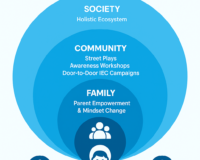
For individuals with developmental disabilities, families often remain the most consistent source of support throughout life. Effective programmes therefore involve parents and caregivers in planning, training, and long-term developmental support.
Research shows that family-centred approaches significantly improve developmental outcomes and social participation (Kuper & Heydt, 2019)

8. Underestimating the importance of trained professionals
Special educators, speech therapists, occupational therapists, psychologists, and vocational trainers play critical roles in supporting individuals with disabilities. Programmes that lack professional expertise may struggle to address complex developmental needs effectively.
Building multidisciplinary teams is therefore an essential component of credible disability programmes.
9. Expecting quick results in complex developmental work
Developmental progress rarely follows a linear timeline. Individuals with autism or intellectual disabilities may require years of consistent support to develop communication skills, independent living abilities, and vocational competencies.
CSR leaders evaluating such programmes should therefore recognise that meaningful inclusion often requires patience, consistency, and sustained investment.

10. Treating disability programmes as charity rather than inclusion
Historically, disability initiatives were often framed through charity models. However, contemporary disability frameworks emphasise rights, participation, and inclusion.
The goal of disability programmes is not simply service delivery, but enabling individuals with disabilities to develop dignity, capability, independence, and socially valued roles in society (Wolfensberger & Thomas, 2007).
CSR initiatives that adopt this perspective are more likely to contribute to meaningful long-term inclusion.
—
References
International Labour Organization. (2015). Inclusion of people with disabilities in the world of work: A review of legislation and policies. Geneva: ILO.
Kuper, H., & Heydt, P. (2019). The missing billion: Access to health services for one billion people with disabilities. London School of Hygiene & Tropical Medicine.
World Health Organization, & World Bank. (2011). World report on disability. Geneva: World Health Organization.
Wolfensberger, W., & Thomas, S. (2007). Social role valorization: A proposed new term for the principle of normalization. Syracuse University Training Institute.